
Jones County Probate Records Overview
North Carolina does not use a separate county probate court for Jones County. Probate is handled by the Clerk of Superior Court acting as ex officio judge of probate. G.S. 28A-2-1 gives the clerk jurisdiction over estate administration. The North Carolina Judicial Branch estates help page explains that elected clerks and assistant clerks hold most estate hearings and preside over most estate cases.
Jones County probate records can include wills filed after death, applications to administer an estate, orders appointing a personal representative, letters testamentary, letters of administration, inventories, accountings, creditor notices, estate receipts, and final distribution filings. A will becomes a public record when filed with the clerk after death, and the Judicial Branch notes that North Carolina does not require a formal reading of the will. If a will caveat challenges the validity of a will, that contest is heard by a Superior Court judge rather than decided only by the clerk.
The Judicial Branch estates help topic is the state source for the clerk's role in Jones County estate administration.
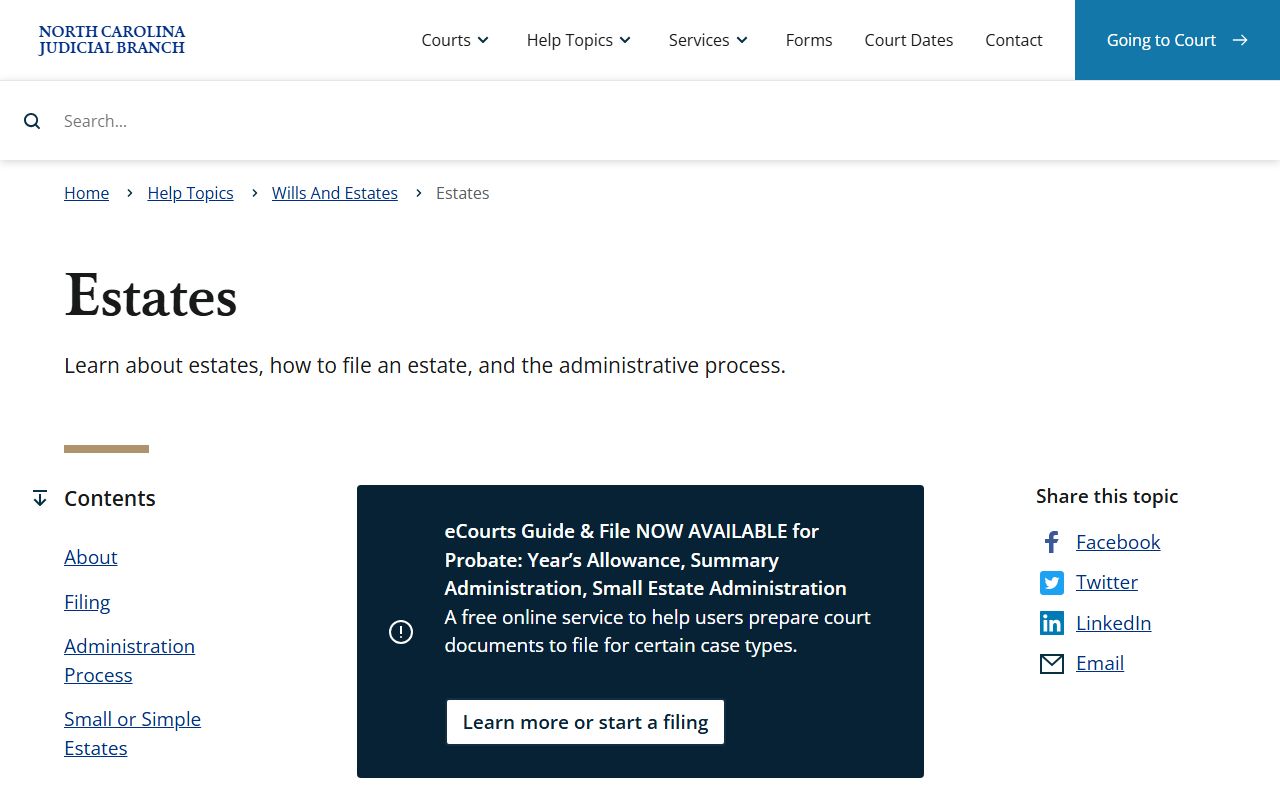
That statewide guidance explains why local probate work is filed with the Jones County Clerk of Superior Court instead of a separate probate court.
Jones County Probate Terms
Probate records use terms that can be hard to read if the file is new to the requester. The definitions below are plain-language labels for common estate and guardianship words that appear in North Carolina clerk files. They do not replace the legal meaning in a court order, but they help when reading a Jones County estate index or paper file.
- Testator
- The person who made a will before death.
- Executor
- The person named in a will to carry out estate duties after qualification by the clerk.
- Intestate
- A death without a valid will, which means estate property passes under intestacy law.
- Personal representative
- A broad term for the executor or administrator authorized by the clerk.
- Guardianship
- A special proceeding in which the clerk may appoint a guardian for a person found incompetent or for a minor.
- Conservatorship
- A term often used for financial management in some states; North Carolina research for Jones County points to guardianship before the clerk.
Search Jones County Probate Records
Estate and special proceeding information may appear in the North Carolina eCourts Portal or on a public self-service terminal, but the paper file remains with the clerk in the county where the estate or proceeding was filed. For Jones County, that local file route is the Clerk of Superior Court at the Jones County Courthouse. The Judicial Branch court-records help topic says civil, special proceeding, and estate case information is available through public terminals, while paper files are inspected in the filing county.
- Start with the decedent name, estate file number if known, and Jones County as the location.
- Use eCourts Portal or a public terminal for available estate or special proceeding case information.
- Contact the Jones County Clerk of Superior Court for paper-file review, certified copies, or older files.
- Use statewide Judicial Branch forms if opening an estate or filing a related estate document.
- Ask the clerk about current costs before filing because estate fees are controlled by current charts and statute.
| Search field | Type | Use |
|---|---|---|
| Decedent name | Text | Primary search term for most estate files. |
| Estate file number | Text | Best input when known. |
| County | Filter | Choose Jones County to narrow statewide records. |
| Case type | Filter | Use estate or special proceeding when available. |
| Filing date | Date range | Helpful for older or common-name records. |
Jones County Probate Clerk Contact
The probate office for Jones County is the Clerk of Superior Court, not a separate probate courthouse. Estate users should use the courthouse address for in-person filings and the courthouse PO Box for mail. The main court phone and clerk number are the same in the research: (252) 448-6220. Courthouse hours shown by the Judicial Branch are Monday through Friday, 8:00 AM to 5:00 PM.
Jones County Clerk of Superior Court
Probate role: ex officio judge of probate
101 Market St
Trenton, NC 28585
Mail: PO Box 280, Trenton, NC 28585
(252) 448-6220
Monday-Friday 8:00 AM-5:00 PM
Note: Marriage licenses are Register of Deeds records, while estate and guardianship files are clerk records.
Jones County Estate Filing Steps
Estate administration usually begins in the county where the decedent was domiciled at death. If a nonresident died with North Carolina property, administration may occur in a county where property or assets are located or come into the estate. The Judicial Branch recommends gathering the original will, a certified death certificate, and asset information before trying to administer an estate. Letters testamentary and letters of administration are issued by the clerk and often prove authority to banks, insurers, and other institutions.
- Locate the original will if one exists, along with any known safe-deposit or attorney-held documents.
- Get a certified death certificate and gather asset, debt, heir, and beneficiary information.
- Contact the Jones County Clerk of Superior Court to confirm the correct estate form and filing route.
- File the estate papers and pay current costs or ask about any available fee treatment.
- Qualify the personal representative and request letters when the clerk issues them.
- File inventories, accountings, notices, and closing documents as required by the clerk's process.
Jones County Guardianship Records
Guardianship and incompetency proceedings are special proceedings before the clerk. The Judicial Branch guardianship page states that the clerk or assistant clerk presides over hearings and makes decisions. A respondent or guardian ad litem may request a jury on competence, but after incompetence is found, the clerk decides who serves as guardian. These files may include health, financial, and personal details, so access can be more limited than access to an ordinary estate file.
G.S. 35A-1105 supports verified incompetency petitions before the clerk. The research file also notes a $120 filing fee and $30 sheriff service fee listed on the guardianship help page for incompetency petitions, but current costs should still be verified with the clerk or current court-cost chart before filing. Guardianship orders, accountings, and reports can affect a person's rights, finances, and care, so public access may be narrower than the access for a filed will.
The North Carolina guardianship help page explains the clerk hearing role behind Jones County guardianship records.
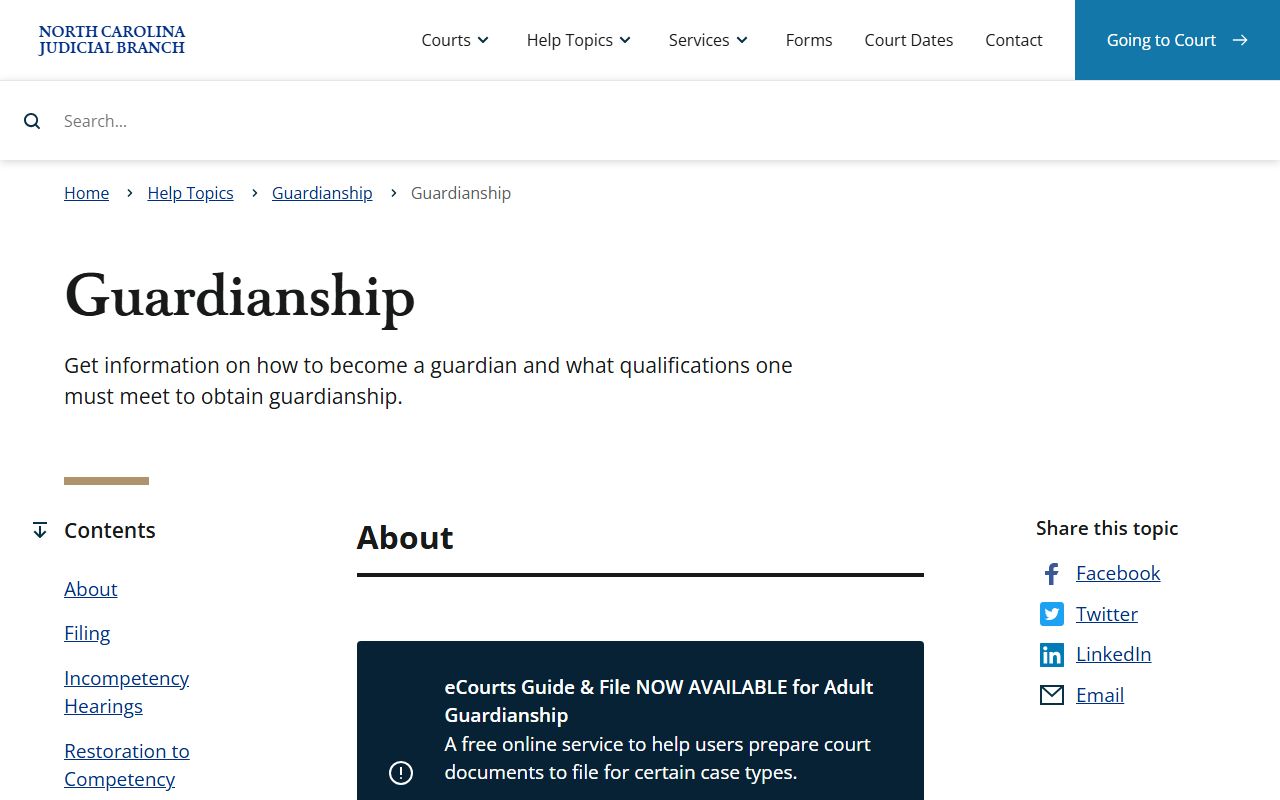
Guardianship should be treated as a clerk special proceeding with possible privacy limits, not as a routine public estate lookup.
Jones County Probate Fee Caveat
Estate costs are not set by a county-made probate court schedule in the research file. They come from current Judicial Branch court-cost charts and statutes such as G.S. 7A-307. The manifest image for the G.S. 7A-307 PDF failed because the source opened as a download, so no screenshot from that row is used. Before filing an estate, opening a special proceeding, requesting certified copies, or paying for service, verify current costs with the Jones County Clerk of Superior Court or the Judicial Branch current court-cost publications.
| Probate item | Amount or source | Jones County action |
|---|---|---|
| Estate administration costs | Current court-cost chart and G.S. 7A-307 | Verify with clerk before filing. |
| Certified estate copy | Current clerk copy and certification fees | Ask for the exact document and number of copies. |
| Letters testamentary or administration | Clerk-issued document, fee may apply | Request when the personal representative qualifies. |
| Guardianship incompetency petition | $120 filing fee noted in research | Verify current fee before filing. |
| Sheriff service for incompetency petition | $30 noted in research | Verify current service fee and address. |
The G.S. 28A-2-1 source image supports the statutory clerk-of-superior-court probate role.
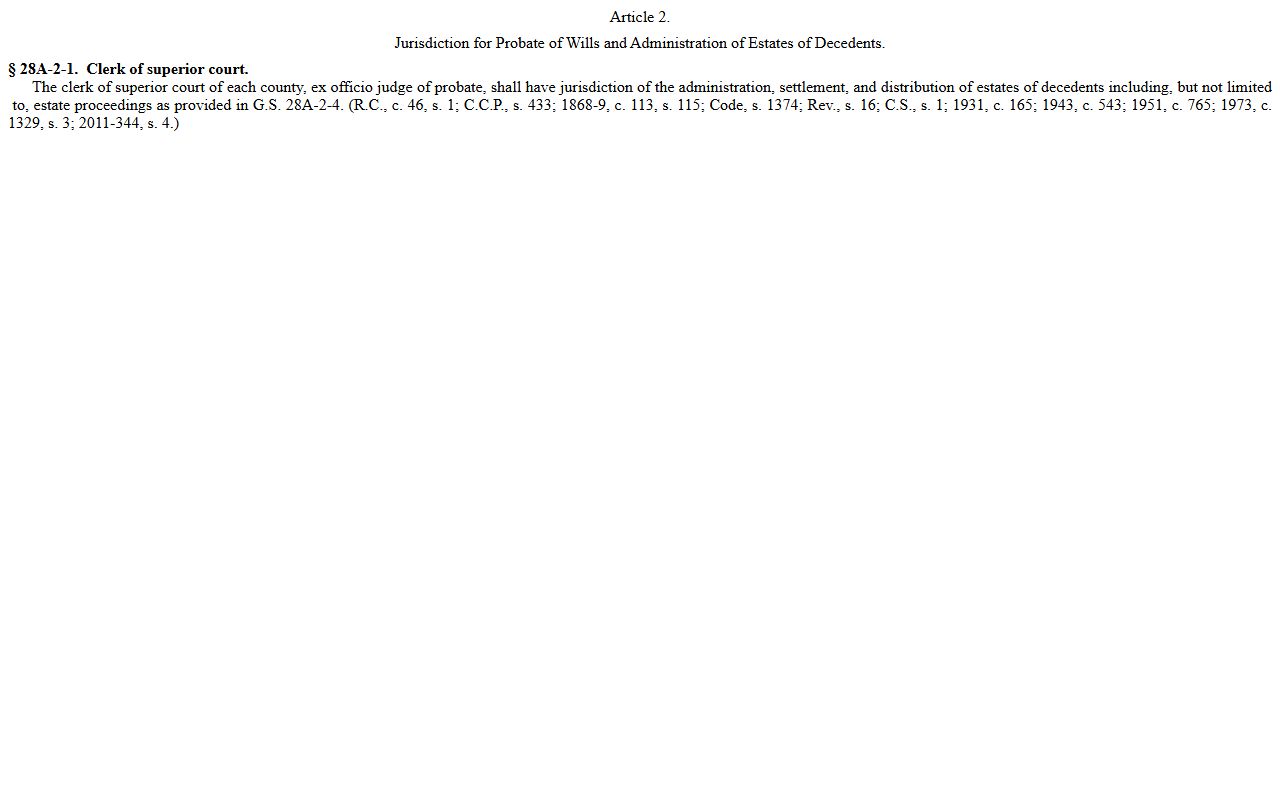
That statute is why the fee question is handled through the clerk's office and statewide cost authority.
What Jones County Probate Records Show
A Jones County estate file may show the decedent name, file number, will, application or petition, personal representative, heirs or beneficiaries, clerk orders, issued letters, inventories, accountings, notices, claims, receipts, and closing papers. Some records are more complete in the paper file than in an online index. Estate searches by name can also miss a file if the name is spelled differently, the estate was opened under a formal legal name, or the case number is not known.
Guardianship records can show petitions, notices, guardian ad litem involvement, capacity findings, guardian appointment orders, and accounting-related filings. Because these records can involve medical, financial, and protected personal information, public display can be limited. Juvenile records and protected information are not open in the same way as ordinary civil court records. Use the clerk for specific access questions when the requested probate record involves a minor, alleged incompetency, sealed material, or sensitive identifiers.
The G.S. 35A-1105 source image ties Jones County guardianship petitions to clerk special proceedings.
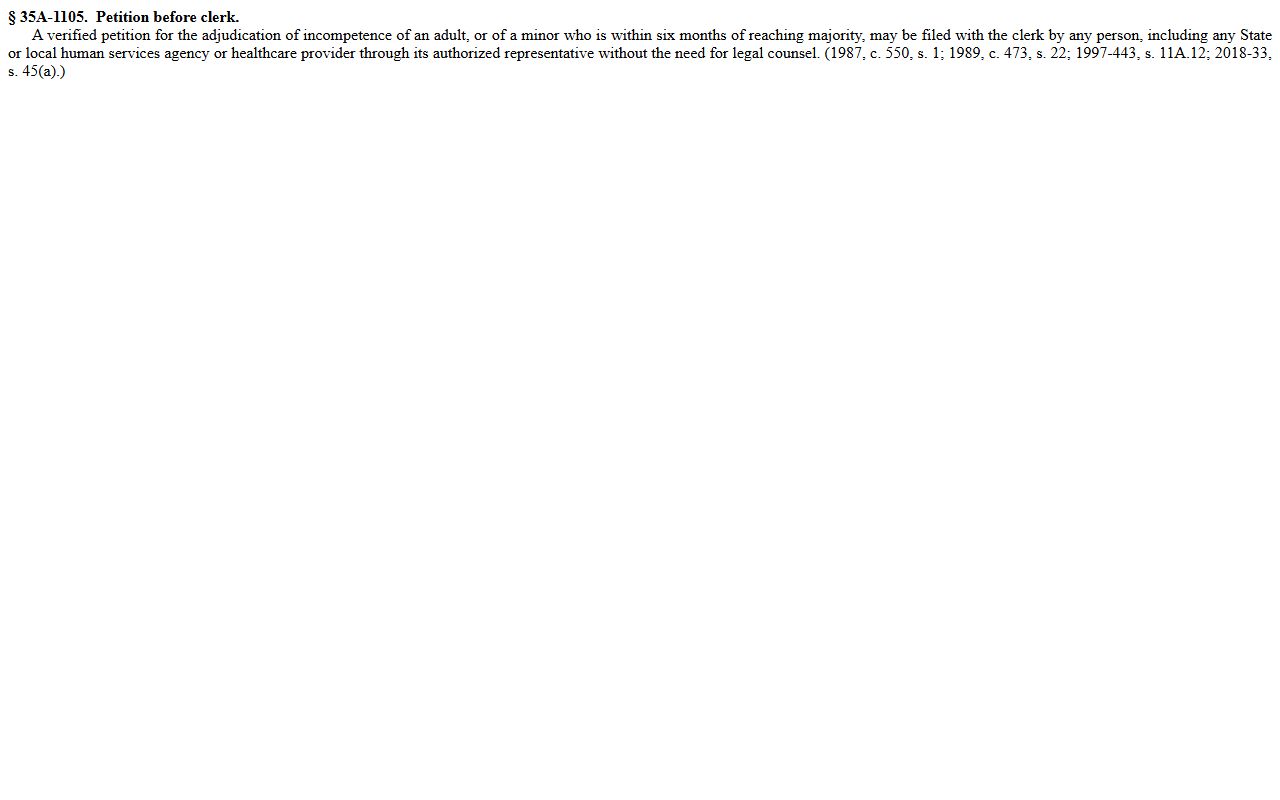
The guardianship statute helps explain why some probate-related files require more careful access handling than filed wills.
Restricted Jones County Probate Records
Public wills and many estate filings are available through the clerk, but not every probate-related document is fully public online. Guardianship, incompetency, mental health, sealed filings, juvenile-related material, protected addresses, Social Security numbers, financial account numbers, and medical details may be restricted or redacted. The best access route for a restricted or unclear file is the Jones County Clerk of Superior Court, because the clerk can confirm whether the record is public, available only to authorized persons, or subject to a court order.
North Carolina public access rules also mean an online portal result may not be the complete file. Paper estate files, certified copies, and older materials can require in-person or clerk-assisted access. When a probate file involves property or family conflict, verify the current case status and document list at the clerk's office before relying on a partial search result.