
Jones County Criminal Court Records
A criminal court record is the case file kept by the court once a criminal matter is opened. In Jones County, that file is handled through the Clerk of Superior Court and the Superior Court or District Court division assigned to the case. The record may begin with a warrant, criminal summons, citation, indictment, or other charging document. It then grows as hearings, motions, pleas, orders, dispositions, sentencing entries, costs, and probation terms are added.
North Carolina court materials distinguish court records from law enforcement records. Police reports and investigative files are held by the agency that investigated the matter, not by the court clerk. The court file tracks the formal case. For a focused look at filed charges and the arrest-to-charge path, use Jones County arrest and charge records; for the whole court case file, the criminal court record is the main source.
The Judicial Branch criminal cases help topic explains District Court, Superior Court, criminal case steps, police reports, and case-result lookup.
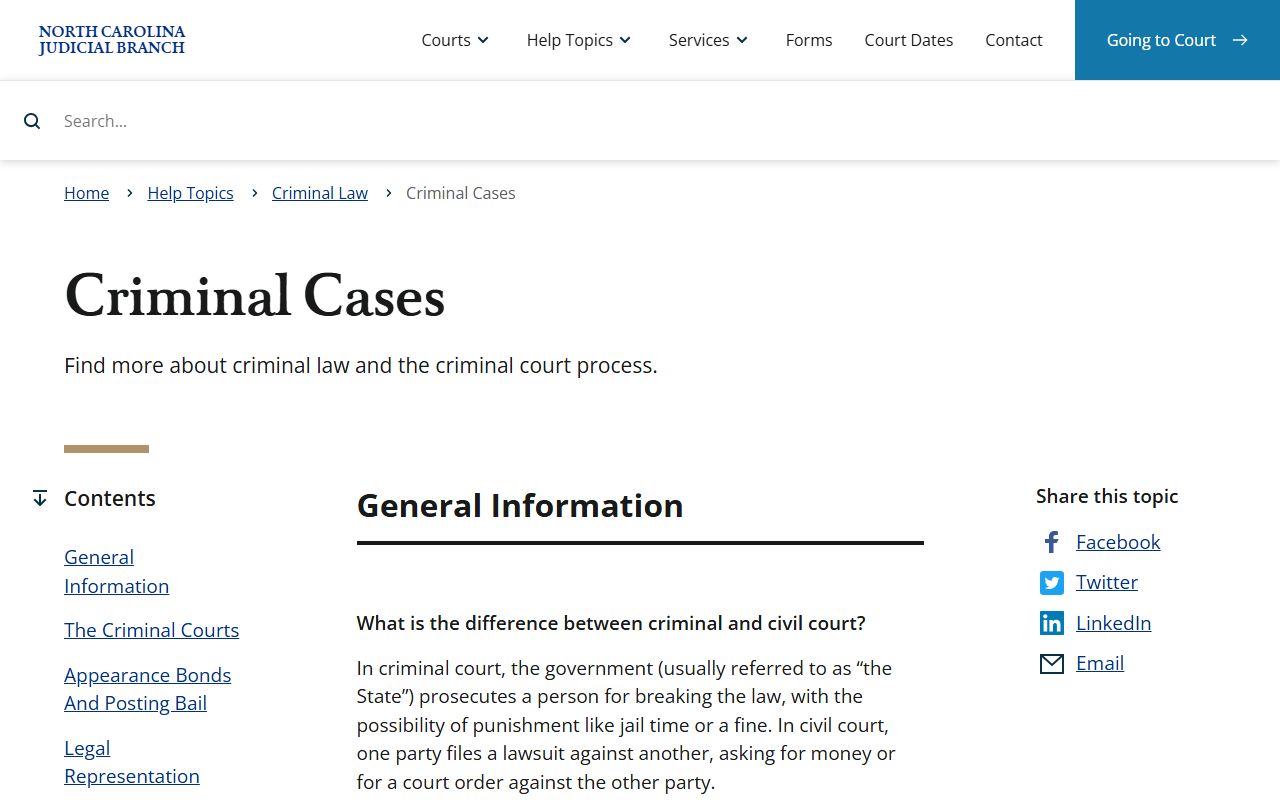
That source is central because Jones County criminal court records follow the same statewide criminal-case framework as other North Carolina counties.
Jones County Criminal Court Divisions
Jones County belongs to Prosecutorial District 5, Superior Court District 5, and District Court District 5. District Court handles misdemeanors and infractions, usually before a judge. Felony cases often begin in District Court for early hearings, then move to Superior Court for indictment, pleas, trials, and final resolution in more serious matters. Superior Court also hears misdemeanor and infraction appeals from District Court.
Magistrates are important at the front end of many criminal matters. A magistrate may issue a criminal summons or warrant when probable cause is found, and after arrest the defendant must be taken before a magistrate without unnecessary delay. That first appearance and release-condition process can later appear in the Jones County criminal court record.
| Court or Official | Criminal Record Role |
|---|---|
| District Court | Misdemeanors, infractions, first settings, and early felony stages. |
| Superior Court | Felony prosecution, jury trials, pleas, sentencing, and District Court appeals. |
| Magistrates | Warrants, criminal summonses, initial appearances, and release conditions. |
| District Attorney | Prosecution of state criminal charges in Prosecutorial District 5. |
| Clerk of Superior Court | Case files, docket entries, public terminals, copies, and court costs. |
Search Jones County Criminal Court Records
Use the North Carolina eCourts Portal to begin a Jones County criminal case search. Smart Search can locate court case information, while Search Hearings can help confirm court dates. The official criminal calendar path for Jones County is also available through the Judicial Branch calendar application. If the online result does not answer the question, use the public terminal or paper file route through the Clerk of Superior Court.
- Search Portal by defendant name, case number, citation number, attorney, or other supported term.
- Filter to Jones County when the statewide search produces results from multiple counties.
- Open the case summary and review charges, hearing entries, docket activity, status, and disposition.
- Check Search Hearings or the Jones County criminal calendar path for current court-date information.
- Contact the Clerk of Superior Court for certified copies, background-check routing, old files, or paper-file review.
The Judicial Branch cautions that people seeking criminal background checks should use the county clerk rather than relying only on Portal. Public terminal access at clerk offices supports searches by defendant name, case number, and victim or witness name. Paper files are reviewed in the county where the case is located, which means Jones County cases route to the Jones County Courthouse.
Jones County Criminal Case Stages
Criminal court records should be read as a timeline, not as one single event. A charge may be filed, amended, dismissed, reduced, or resolved by plea or trial. A hearing may be continued. A felony may begin in District Court and later move to Superior Court. Each step can leave a docket entry or document in the Jones County criminal court record.
Case flow: Charges Filed › Initial Appearance › Probable Cause or Indictment › Pretrial / Motions › Plea or Trial › Disposition › Sentencing
| Stage | What Happens |
|---|---|
| Charges filed | A citation, summons, warrant, indictment, or other charging paper opens or supports the case. |
| Initial appearance | A magistrate informs the defendant of charges, counsel rights, and release conditions after arrest. |
| Probable cause / indictment | Felony matters may move through District Court screening and Superior Court indictment. |
| Pretrial / motions | Parties file motions, schedule hearings, address discovery issues, and prepare plea or trial positions. |
| Plea or trial | The case resolves by plea, bench or jury trial, dismissal, or another court-approved outcome. |
| Disposition / sentence | The court records the outcome, judgment, costs, custody, probation, or other sentence terms. |
The Judicial Branch crime-victim page describes summonses, warrants, arrest, first appearance, probable cause hearings, and plea stages.
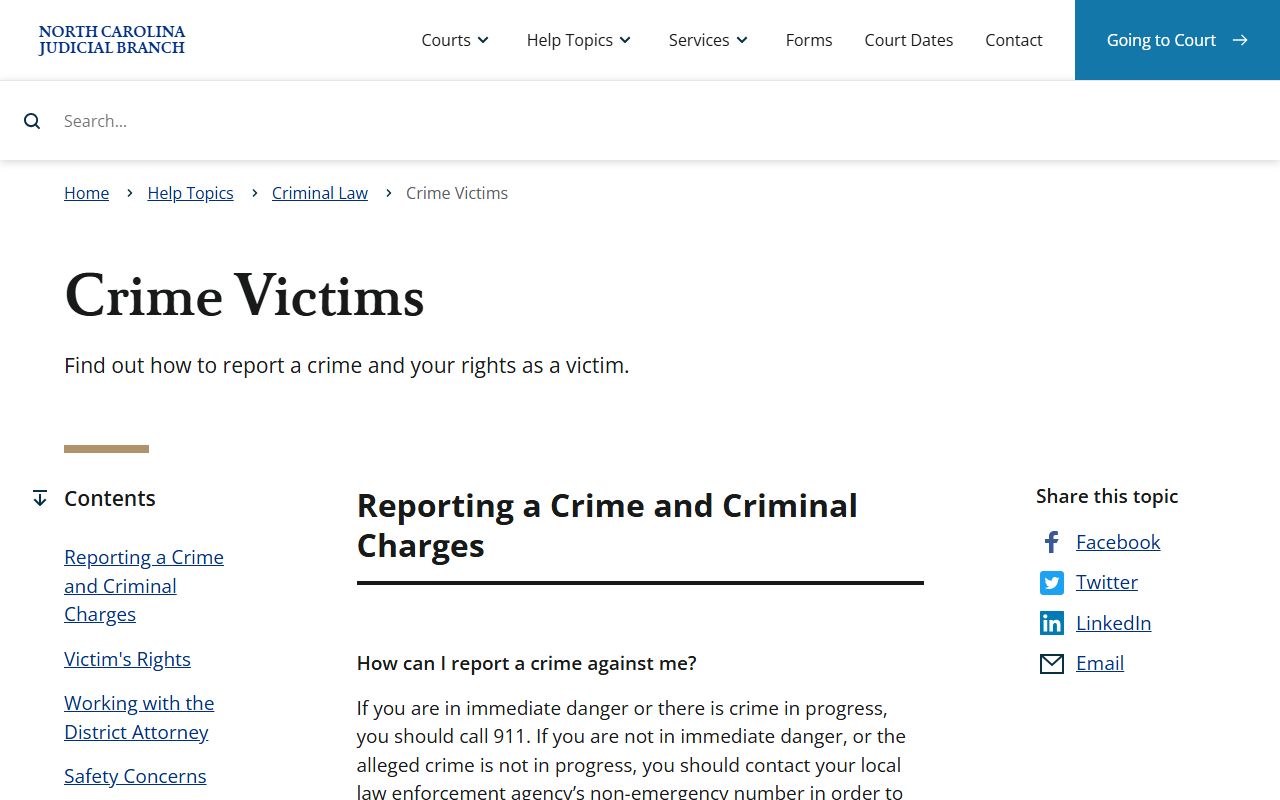
Those case stages help explain why one Jones County criminal court record may include both early magistrate activity and later court outcomes.
What Jones County Criminal Records Show
A Jones County criminal court record can show the defendant, charges, case number, court division, attorney information, bond or release entries, hearings, motions, pleas, verdicts, dispositions, sentences, costs, restitution, and probation terms. It may also show dismissed or reduced charges, which is why a criminal record must be read field by field. A charge listed in the file is not the same as a conviction.
| Field | What It Shows |
|---|---|
| Case number | The unique identifier for searching Portal, hearings, terminal records, and clerk files. |
| Defendant | The person charged in the criminal case. |
| Charges | Offenses filed by citation, warrant, summons, information, indictment, or related charging document. |
| Bond / release | Release conditions, secured or unsecured bond information, or commitment status when public. |
| Plea | The defendant's answer to a charge, such as guilty, not guilty, or another accepted plea entry. |
| Disposition | The outcome of each charge, such as guilty, dismissed, not guilty, or other result. |
| Sentence | Custody, probation, fines, restitution, costs, or other punishment after conviction. |
| Restrictions | Sealed, expunged, juvenile, or redacted information that is not available to the public. |
Jones County Charges vs Convictions
A charge is an accusation filed in court. A conviction is a final outcome after a guilty plea, verdict, or other conviction entry. Jones County criminal court records may show charges that were dismissed, reduced, amended, or resolved without conviction. This distinction is critical for readers checking criminal history, court dates, sentencing, or eligibility for expunction.
| Point | Charge | Conviction |
|---|---|---|
| Meaning | An allegation filed in a criminal case. | A final finding or plea that establishes guilt. |
| Record stage | Appears early and may change. | Appears after plea, verdict, or final judgment. |
| Outcome risk | May be dismissed, reduced, or amended. | May lead to sentence, costs, probation, or custody. |
| Search caution | Do not treat a charge alone as guilt. | Read the disposition and sentence fields together. |
Sealed Jones County Criminal Records
Some Jones County criminal court records are restricted by statute or court order. Juvenile records are withheld from public inspection except as allowed by law or court order. Sealed records are hidden from public view while still existing for authorized uses. Expunged records are removed or destroyed for most public-record purposes after an expunction order is granted under the applicable statute.
| Point | Sealed | Expunged |
|---|---|---|
| Public visibility | Hidden from public inspection. | Removed from public criminal-record access after order processing. |
| Record status | Exists but is access-limited. | Treated as removed or destroyed for most public purposes. |
| How it happens | By statute or court order. | By petition and court order under an eligible expunction statute. |
| Jones County route | Ask the clerk about access procedure. | File eligible petitions with the Clerk of Superior Court using official forms. |
The Judicial Branch expunction help topic lists common North Carolina expunction statutes and process concepts.
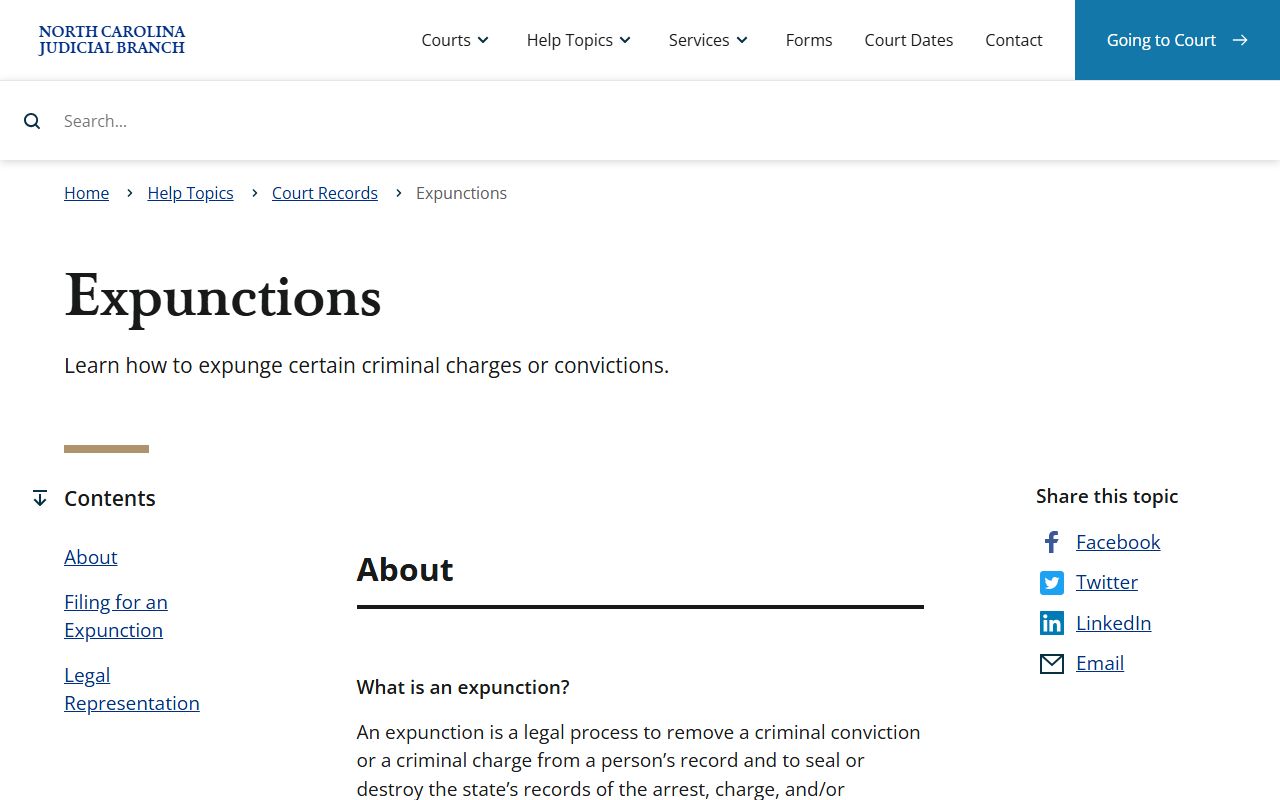
Expunction eligibility is case-specific, so Jones County criminal court records should be checked by exact charge, disposition, and statute before any petition is filed.
Public Access to Jones County Criminal Records
North Carolina law generally makes ordinary court records available through the clerk unless a law or court order says otherwise. G.S. 7A-109 addresses clerk record-keeping and public inspection of court records except where prohibited. Chapter 132 also makes returned arrest and search warrants, indictments, criminal summonses, and nontestimonial identification orders public unless sealed.
Public access does not mean every criminal record is complete online. Portal, calendars, terminal access, and paper file inspection serve different needs. Certified copies and background-check routing belong with the clerk. Investigative reports, body camera materials, and law enforcement case files do not become court records merely because a criminal charge exists.
G.S. 15A-145.5 governs expunction of certain nonviolent misdemeanor and felony convictions when statutory criteria are met.
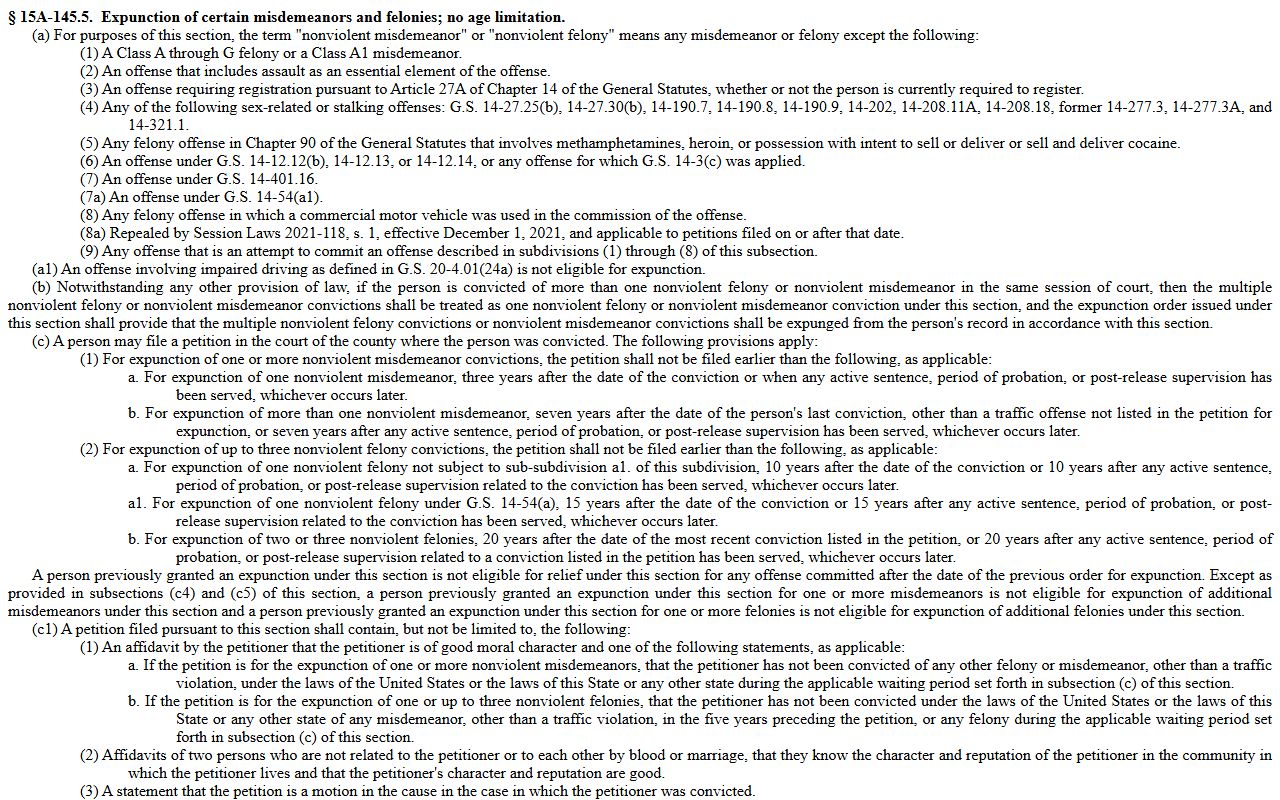
The statute matters because a public Jones County criminal court record can later become unavailable if an expunction order applies.
Note: Juvenile, sealed, and expunged criminal records should not be expected to appear in public Jones County searches.
Jones County Criminal Records and DA Contacts
The District Attorney prosecutes criminal charges for the State in Prosecutorial District 5. The Jones County contact directory lists District Attorney offices in Duplin and Sampson: the Duplin office at (910) 275-7010 and the Sampson office at (910) 596-6610. The prosecutor's role begins after charges are filed, while arrest reports and investigative materials remain with the law enforcement agency that handled the investigation.
No Jones County-specific public defender office page was located in the official sources reviewed. North Carolina indigent defense may be appointed through the court for eligible defendants. For a pending criminal charge, a user should ask at first appearance or contact the Clerk of Superior Court about appointed-counsel procedure. The clerk can route procedural questions, but cannot provide legal advice.
The U.S. Attorney's Office for the Eastern District of North Carolina handles federal prosecutions in the district that includes Jones County.
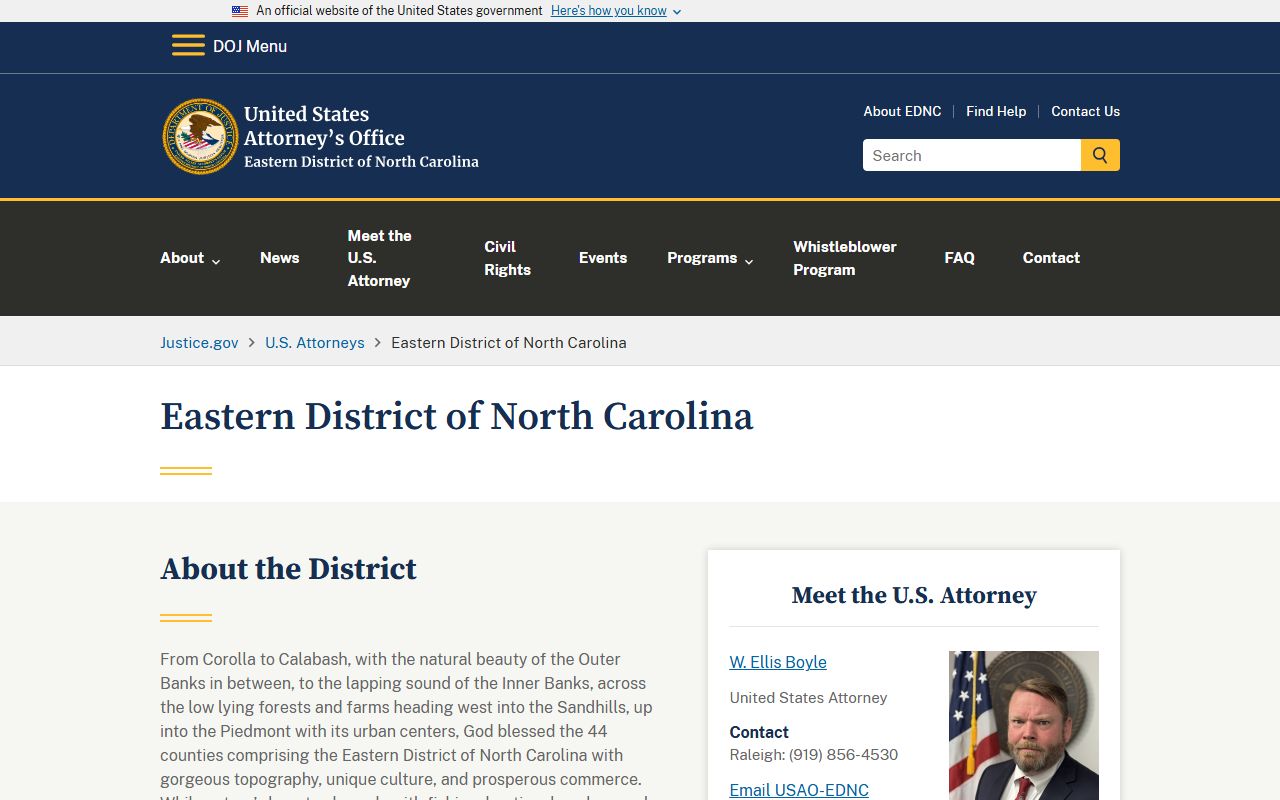
Federal criminal records are separate from Jones County state criminal court records and are searched through federal court systems.
Jones County Criminal Record Limits
Criminal court records can lag after hearings, payments, or continuances. A search result may also reflect only what is public. If a case involves a juvenile, sealed filing, expunction order, protected address, minor information, or sensitive personal data, the public view may be incomplete or unavailable. A missing result does not prove that no case, warrant, or restricted file exists.
Use the clerk for official case status, certified copies, and background-check direction. Use the sheriff or detention center for custody status. Use the magistrate for certain warrant and initial appearance questions. Use the District Attorney for prosecution and traffic-ticket questions when the official source directs that route. Those channels keep Jones County criminal court records separate from arrest records, jail records, and law enforcement reports.